
- News
- City News
- mumbai News
- Mumbai: Blue synagogue was originally green & gold
Trending
This story is from February 5, 2019
Mumbai: Blue synagogue was originally green & gold
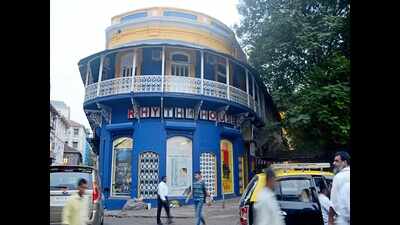
Rhythm House in Mumbai
Thus, choosing sage green for the interior was a “no-brainer” but Narain decided to stick with blue for the exterior out of respect for oral history and memory.

A Classical Revival structure, which is listed as Grade II A, the Keneseth Eliyahoo Synagogue boasts a large pediment on the Western facade, three stained glass panels, fluted Corinthian columns, Minton tiles and brass lamps. The conservation work, which cost almost Rs 5 crore, was funded largely by JSW Group with smaller grants from Kala Ghoda Association, World Monuments Fund and Sir Jacob Sassoon and Allied Trust. Sangita Jindal, chairperson of JSW Foundation, said she had long admired the synagogue building and was “charmed by its colour” but dismayed by its dilapidated condition. “If the building has some historic importance, I will help in its restoration irrespective of its religious affiliation,” Jindal pointed out while saying that people often ask why she chose to restore a Jewish structure.
The work began in late January 2018 with the restoration of the timber roof and rafters. In order to retain as much of the original wood as possible, Lambah’s team used the splice repair technique, cutting off the rotten part of each rafter and joining the rest to another piece of timber in a zig-zag pattern. Missing Minton tiles were replaced with Bharat tiles and brass chandeliers were rewired. Paint was scraped off the synagogue’s cast iron columns and walls, revealing floral stencilling similar to the kind found in the BMC headquarters. “This is the second building where we’ve come across Victorian stencilling,” says Lambah. “Clearly, there were these beautiful stencils that we have lost over time because of repainting.”
The synagogue was built in 1884 by Sir Jacob Sassoon in memory of his father Elias David Sassoon. Jacob is the grandson of David Sassoon, a Baghdadi Jew, who established the Sassoon dynasty in Bombay in 1800s. The building was designed by an English civil engineer David E Gostling and his partner James Morris. The same architectural firm later designed the Times of India building in 1901.
The synagogue is walking distance from David Sassoon Mechanics Institute—now David Sassoon Library—and David Sassoon’s first home in Bombay before he built his palatial Byculla mansion. The newly restored structure, which boasts a community kitchen and café, will be inaugurated on Thursday, February 7.
End of Article
FOLLOW US ON SOCIAL MEDIA











Hot Picks
TOP TRENDING
Popular Categories
Hot on the Web
Top Trends
IND vs BAN Live ScoreNEET UG CounsellingDolly ChaiwalaKamindu MendisMCC Weekdays Bash FightVince McMahon Netflix DocuseriesVirat KohliHigh Paying Freelance JobsElon Musk Dating MeloniNEET UG Paper Leak CaseKerala Lottery ResultsTamil Nadu NEET UG CounsellingWho is Dominik Mysterios WifeWest Bengal Teacher RecruitmentIsrael Hezbollah WarKerala Bans Study NotesLive Cricket Score
Trending Topics
Living and entertainment
Latest News
HC raps CCP for evicting 2 from fish mkt buildingTravis Kelce Shares His Excitement for His Acting Debut in Ryan Murphy’s Mystery Thriller GrotesquerieFirst person died in UK from ‘liquid’ Brazilian butt lift: All you need to know about liquid BBL and risks it posesNayanthara and Vignesh Shivan share emotional notes on their twins Ulag and Uyir's second birthdayIsraeli strikes kill 600, displace 90,000 as Lebanese civilians flee in DesperationNavya Naveli Nanda reacts to Kolkata rape-murder case, calls for accountability and safer spaces for womenArijit Singh apologizes to his female fan as the security guard held her neck during his UK concert: 'I could not protect you'World tourism day 2024: Recreate your favourite filmi moments at these localesKrithi Shetty shares a sneak peek of her birthday celebration - SEE PICSSaif Ali Khan admits that the ‘Adipurush’ controversy was 'unsettling'; says “you need to stay away from religion...'Valpoi torrential rainfall sets record, crosses 200 inchesWeight loss and more: 5 reasons to eat soaked methi seeds every morningOptical Illusion: Only a visually sharp person can spot the caterpillar on this treeWas tired of her atrocities, so killed her: Chilling details from diary of Bengaluru woman's murderer who chopped her into '59' piecesWhy are Nazca lines among the world's greatest mysteries?Maha questions from opposition’s small alliesBig Story -Has Kollywood lost its plot?Did Vincent van Gogh’s paintings have a connection with Bihar? Research says yes!
Copyright © 2024 Bennett, Coleman & Co. Ltd. All rights reserved. For reprint rights: Times Syndication Service